The hardest business to move isn't the one in crisis. It's the one for which everything still works: stable processes, a connection that does the job, no burning reason to change. That is the problem the Amsterdam port keeps running into on its way to a green future — and it was the one put to young professionals at the ORAM Next Gen Festival on 28 August.
In a pressure-cooker session at UP Events, participants from across the Amsterdam Metropolitan Area, all aged 20 to 39, took on a deceptively practical question: how can the port's businesses go greener while staying competitive?
A stark starting point
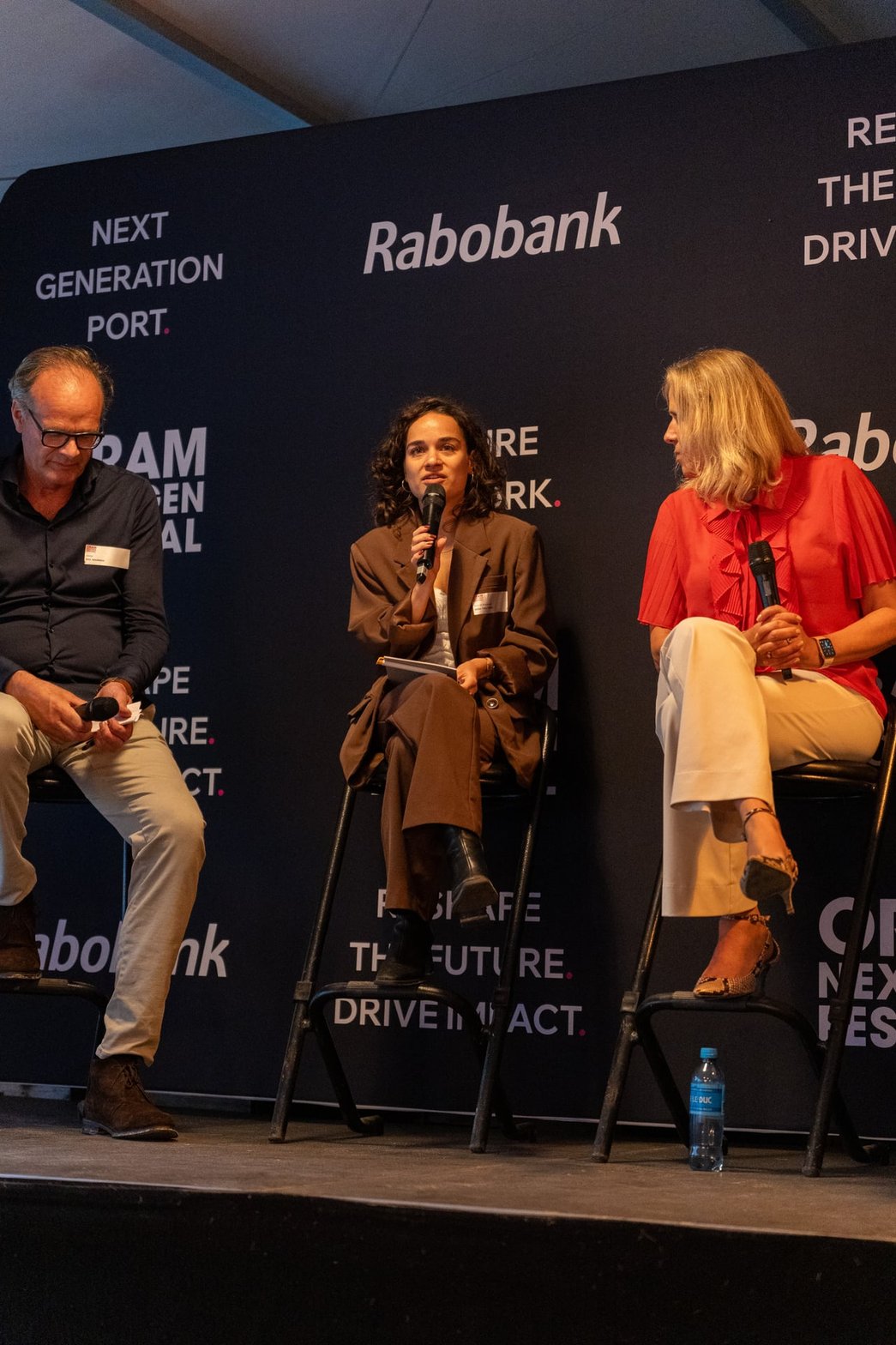
The session was convened through COOP Centraal, the MRA network for energy cooperatives, together with Port of Amsterdam and ECAH, the energy cooperative for companies in the harbour. Rhea Creutzburg (Port of Amsterdam) and Mardou Bijker (ECAH) set the scene, and it is a stark one.
The port's 2040 vision is clean: renewable energy, circular industry, clean shipping. Today it is one of the world's largest fuel ports, with steelmaking, bunkering and aviation fuel for Schiphol all still built on fossil energy. The grid that would carry the alternative is full: of ECAH's 41 member companies, between half and two-thirds already run into congestion, and new capacity has a waiting list that stretches years into the future.
"Many businesses feel no pain yet, so they wait — and every business that waits keeps the problem invisible."
Three directions from the room
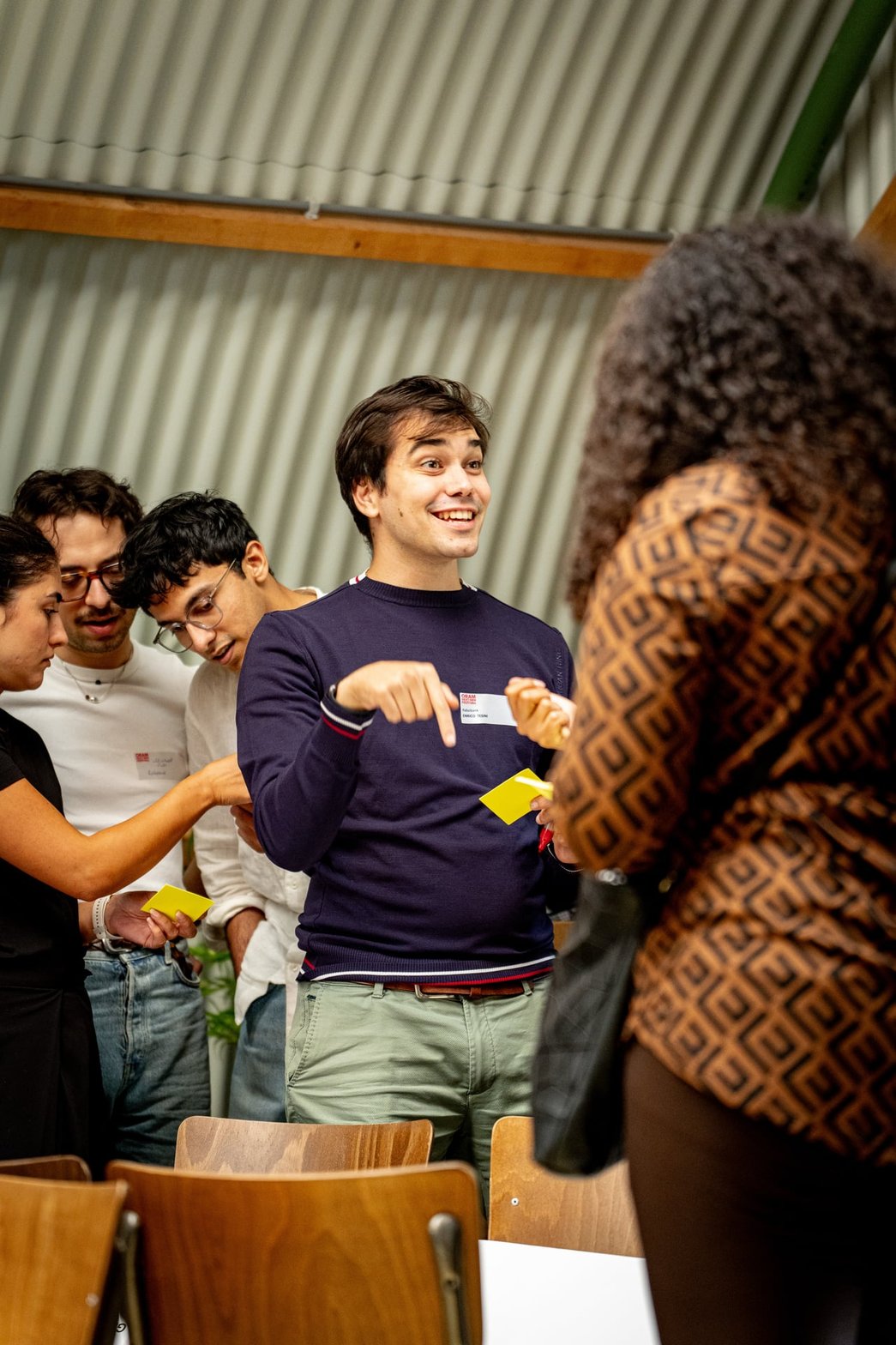
The task for participants wasn't to design a new grid, but to find the first move that gets these companies acting. Working in timed five-minute steps, two groups arrived at three ideas that pointed the same way.
- Make the squeeze visible. You can't move a company that can't see its own position. Both groups wanted the hidden problem documented and shared: map grid congestion, open up the data (including with Rotterdam), and show each business where it actually stands. Transparency turns an abstract national issue into a local, personal one.
- Move companies through their peers, not mandates. Rather than rules from above, use the community: invite the businesses that have already switched to tell the rest what moved them, build a shared practice around it, and let social proof — and a little discomfort — do the work regulation can't. The value, as one group put it, is a community culture, not just a connection.
- Engineer shared value. Make cooperating the rational choice through industrial symbiosis, where one company's waste heat or by-product becomes another's input, so going green pays rather than costs. That needs alignment above the fence line too: The Hague, Amsterdam, Rotterdam and a Brussels lobby were all named as actors who have to pull the same way.
Honest about the gaps
None of it is a worked-out plan, and the groups were honest about where it thins out: who pays for the first move, who is willing to go first, and how you make a symbiosis or a community actually bind.
But both groups landed, independently, on the same shift. The barrier in the port isn't only physical infrastructure — it's behaviour and relationships, and those are things young professionals are well placed to start shifting now.
There is somewhere for it to go. COOP Centraal exists precisely to strengthen and accelerate this kind of cooperation across the region, and participants who wanted to keep building were invited to stay involved.